

Featured comment
“Love how easy this was to make! Followed everything step by step except I used 1.5 cups of quinoa and 0.5 cups of red lentils because I ran out of lentils, and used flax seeds instead of psyllium because that’s what I had on hand! Still worked! This will be a staple in my home!”
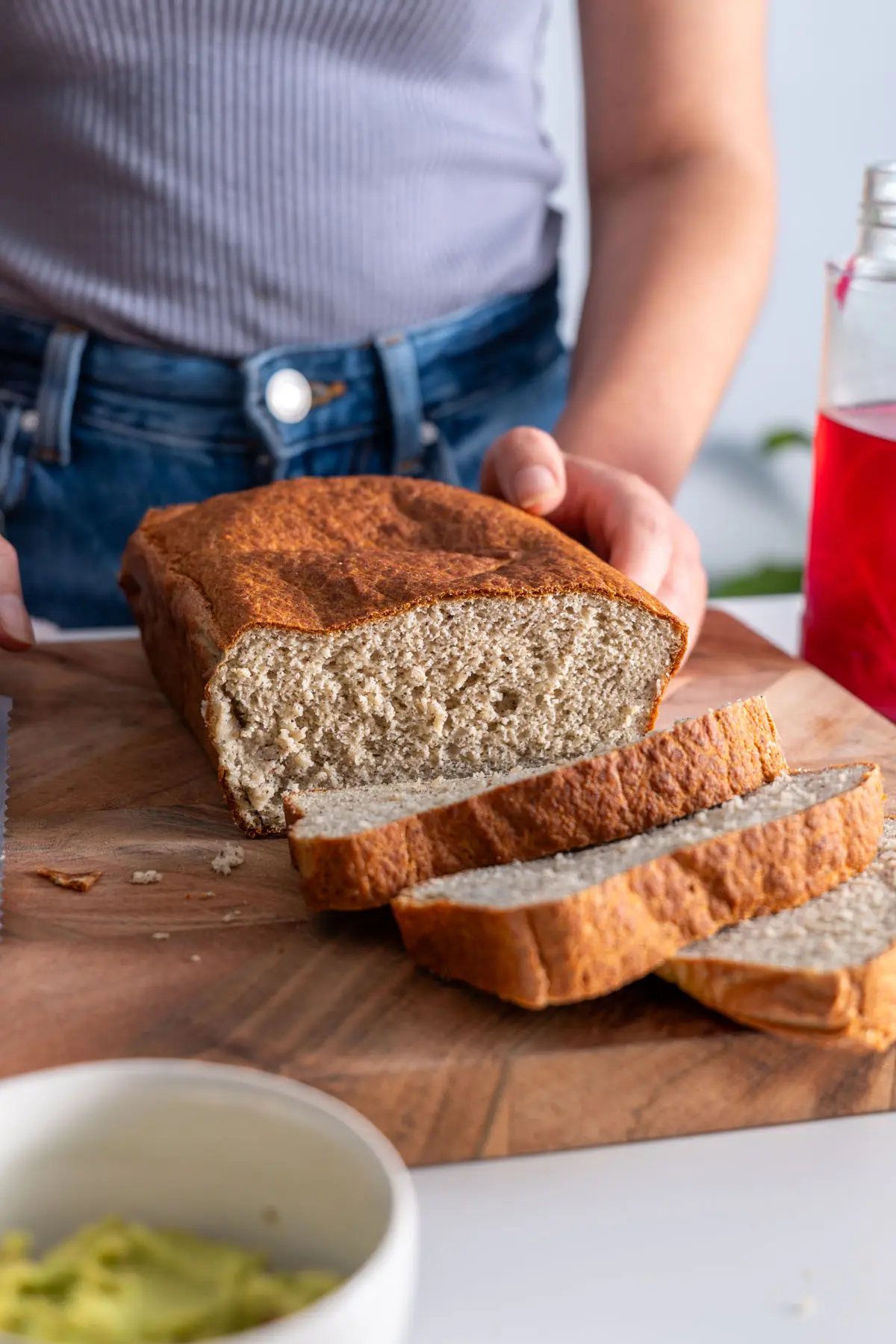
I’m really excited to share this Red Lentil Quinoa Bread recipe with you! After the massive success of our One-Ingredient GF Buckwheat Bread, so many of you have been asking me for more bread alternatives. After testing this new bread recipe over a dozen times, I’m so happy to say it is absolutely amazing! It has quickly become a staple in our kitchen because it’s effortless to make, uses simple ingredients, and is the perfect base for protein and fiber-packed sandwiches. Good quality gluten-free bread can be pretty expensive, too… where I live, it’s usually around $10 to $15 a loaf, but this budget-friendly version comes to around $3.70 AUD ($2.50 USD)!
Red lentils, quinoa, and yogurt are staples in many homes. If you’ve done any gluten-free baking before, I bet you have some psyllium husk in your pantry. If you’re unfamiliar with it, you’ll be happy to know that it’s widely available, budget-friendly, and has a long shelf life. Psyllium husk is a key ingredient in making gluten-free bread more bouncy and elastic, qualities usually provided by gluten.
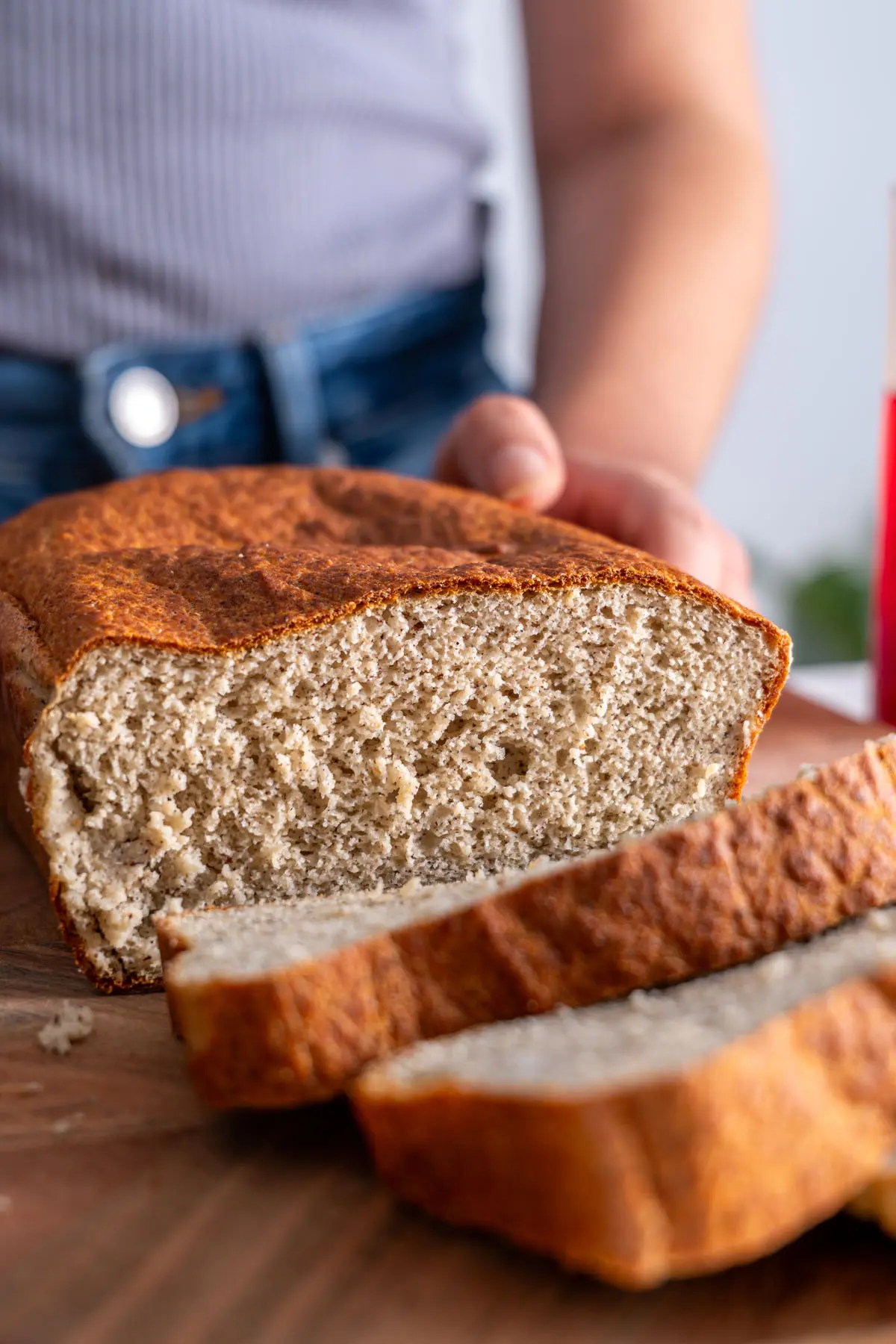
After a quick blend, short rise, and bake, the result is a soft, fluffy, and light oil-free bread. I was pleasantly surprised to discover that the lentils are completely undetectable in the flavor. This bread is perfect for toasts and sandwiches, and I suspect it will have the ideal texture for gluten-free vegan French toast. Something I’ll definitely have to try soon! If you love this one, my easiest red lentil bread and gluten-free seeded bread are next on your bake list.
Why I Love This Recipe
- High in protein: from the combination of red lentils and quinoa.
- Gluten-free: making it a great option for those avoiding wheat.
- Rich in fiber: promoting healthy digestion.
- Oil-Free: perfect for those following a whole food plant-based diet (WFPB).
- Simple ingredients: that are easy to find and affordable.
- Quick to make: once you’ve soaked the red lentils and quinoa, the bread takes less than 2 hours before being ready to eat.
- Straightforward: no fermentation or complicated steps are required; this recipe is foolproof!!

Ingredient Notes
- Red lentils: These split lentils cook quickly and blend smoothly. They’re a great source of plant-based protein and fiber. Lentils are rich in minerals, including iron; two slices of this bread bring 4 mg of iron, making it a great start to an iron-packed sandwich.
- Quinoa: A perfect gluten-free grain that adds texture and boosts the protein content. Always rinse quinoa thoroughly before cooking to remove the bitter coating.
- Instant yeast: Helps the bread rise.
- Dairy-free yogurt: This adds moisture and binds the dough together. If preferred, you can substitute with olive oil, which will yield a slightly different, slightly more moist texture.
- Psyllium husk is essential for keeping the bread moist and adding fiber. It acts as a binder in place of gluten.
How to Make This Recipe (Summary)
Rinse the lentils and quinoa thoroughly to remove bitterness. Soak them in cold water for 6-12 hours in the fridge, then drain and rinse again.
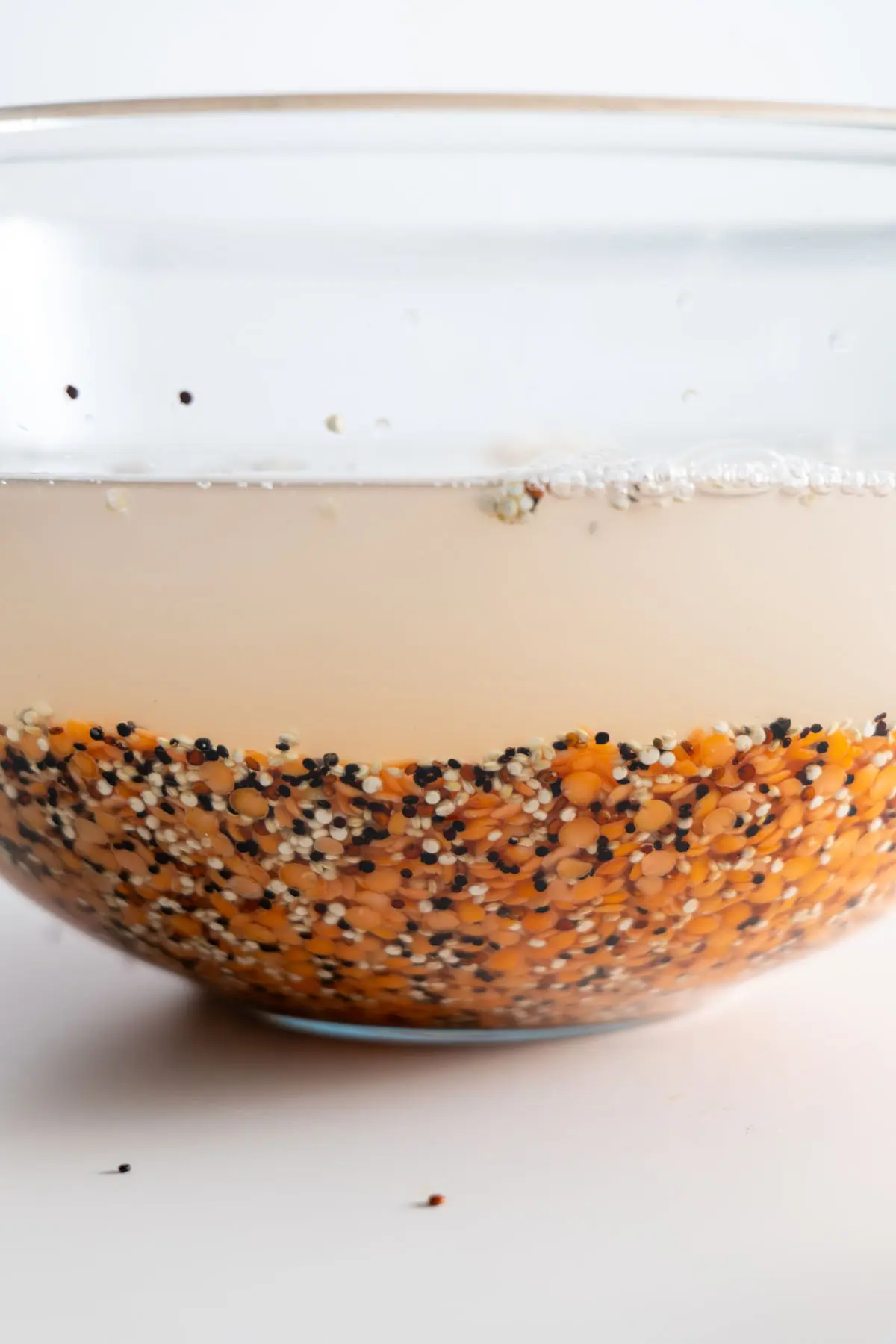
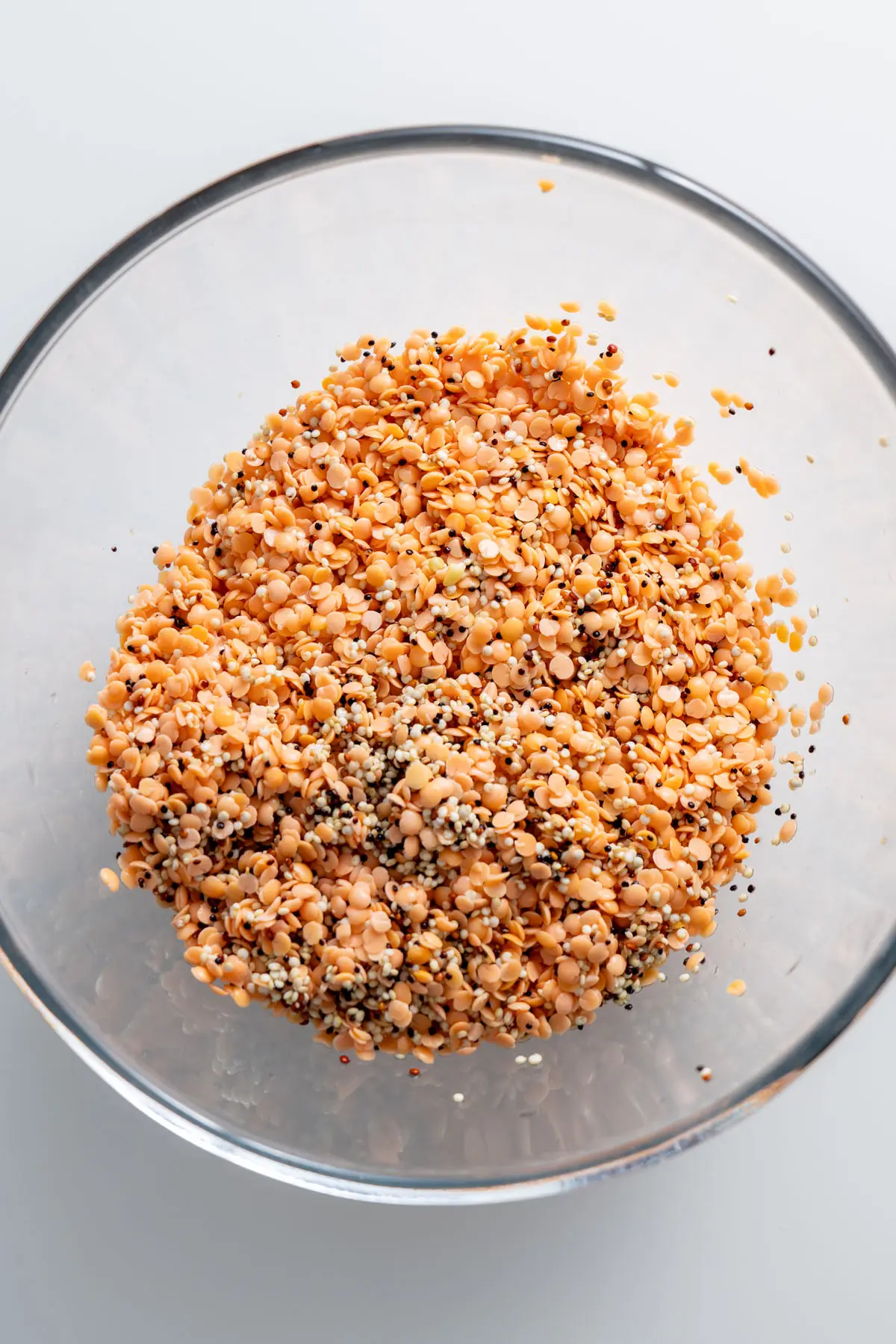
Blend the lentils, quinoa, yeast, yogurt (or olive oil), psyllium husk, salt, and water until smooth.
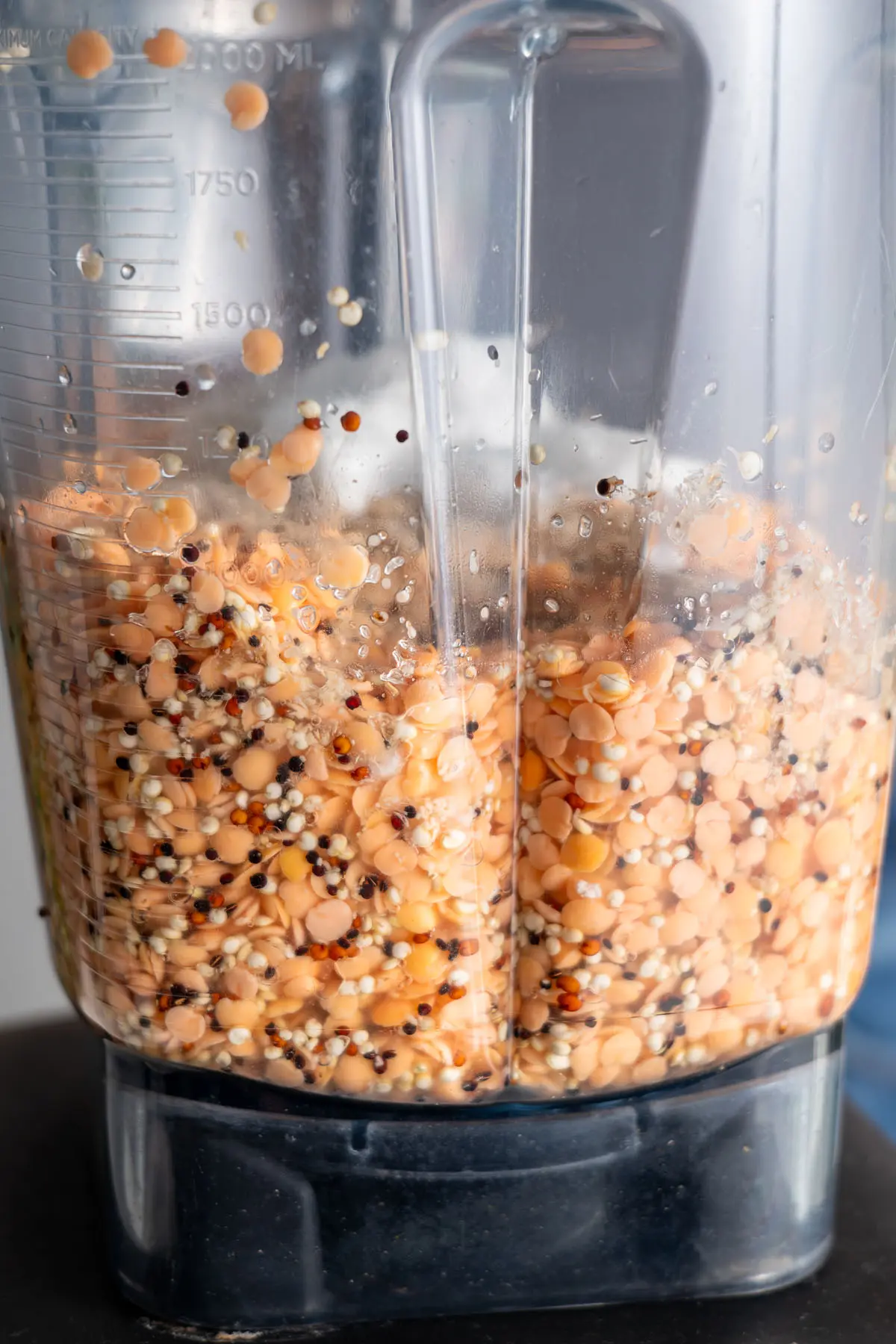
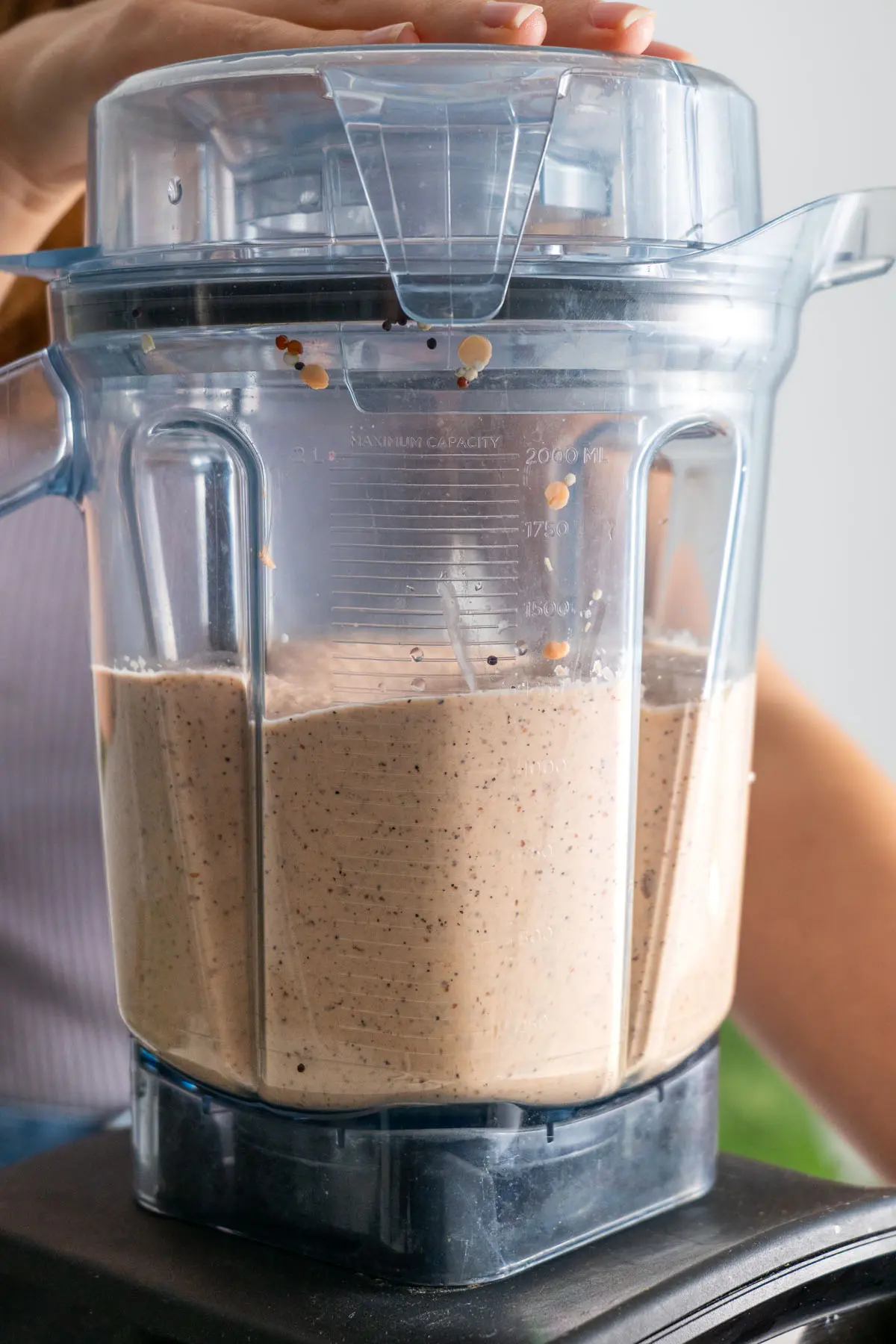
Transfer the mixture to a lined loaf pan and let it rest uncovered for 30 minutes to rise.
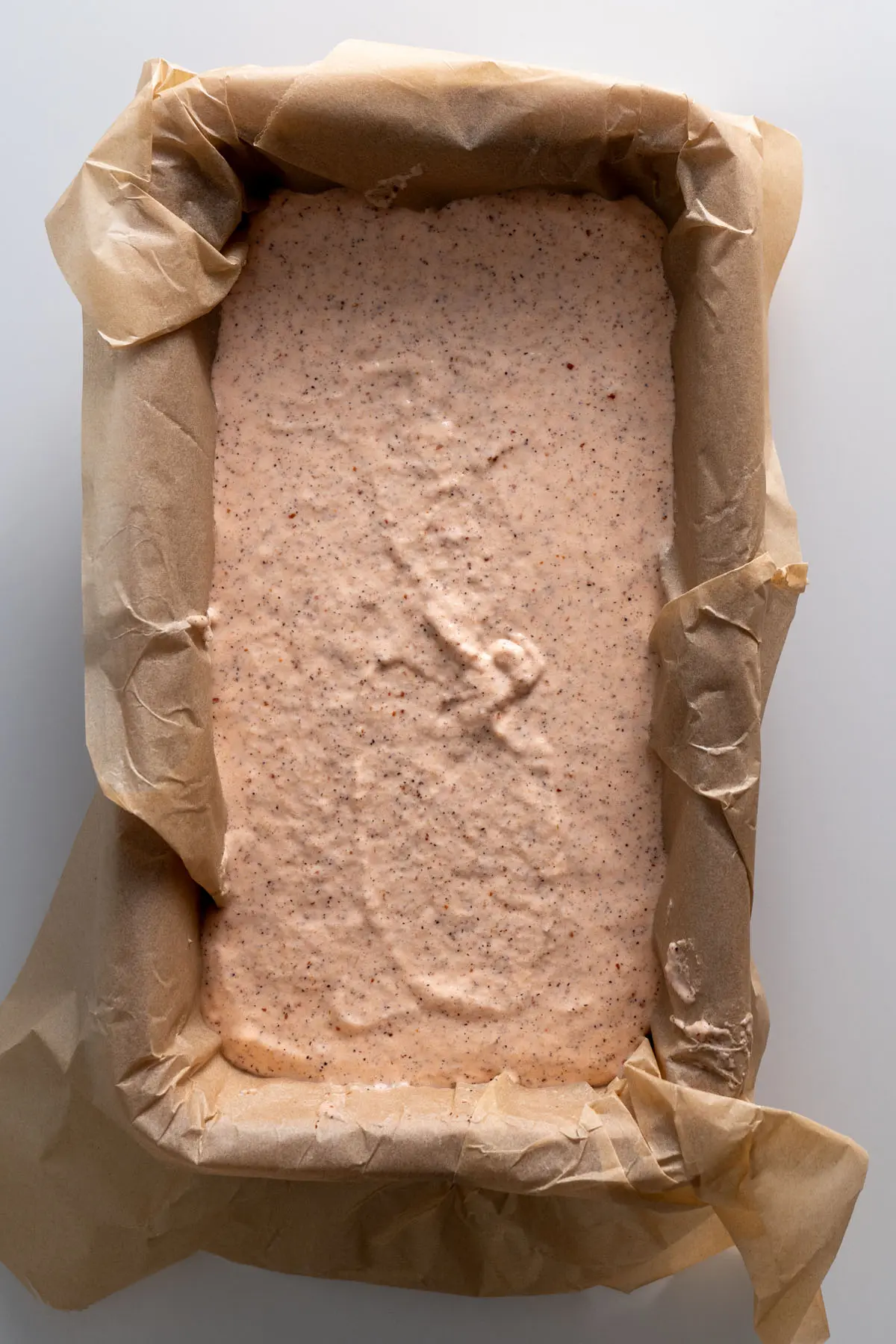
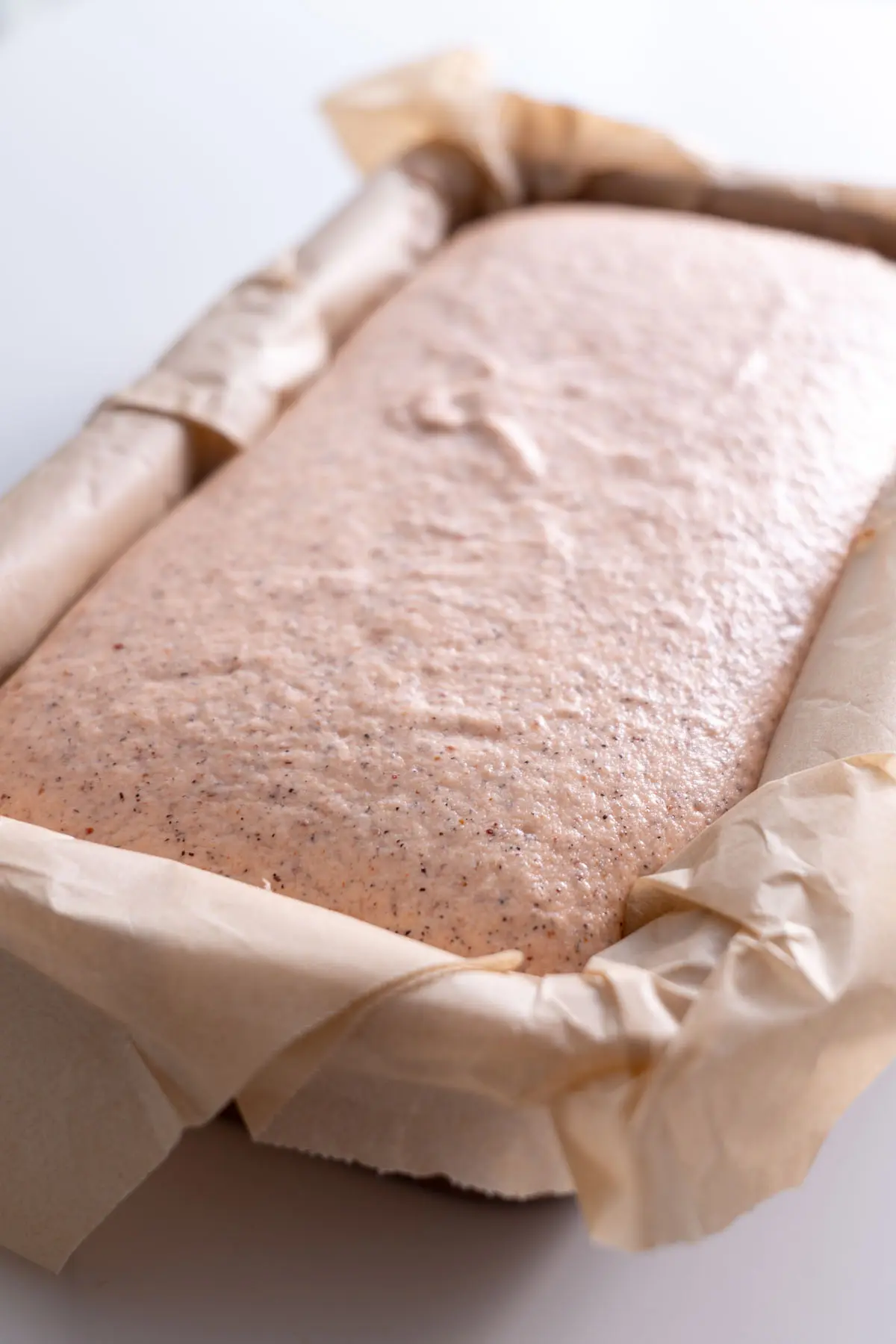
Preheat the oven to 350°F (180°C) with a metal tray on the bottom rack. Bake the loaf for 50 minutes,
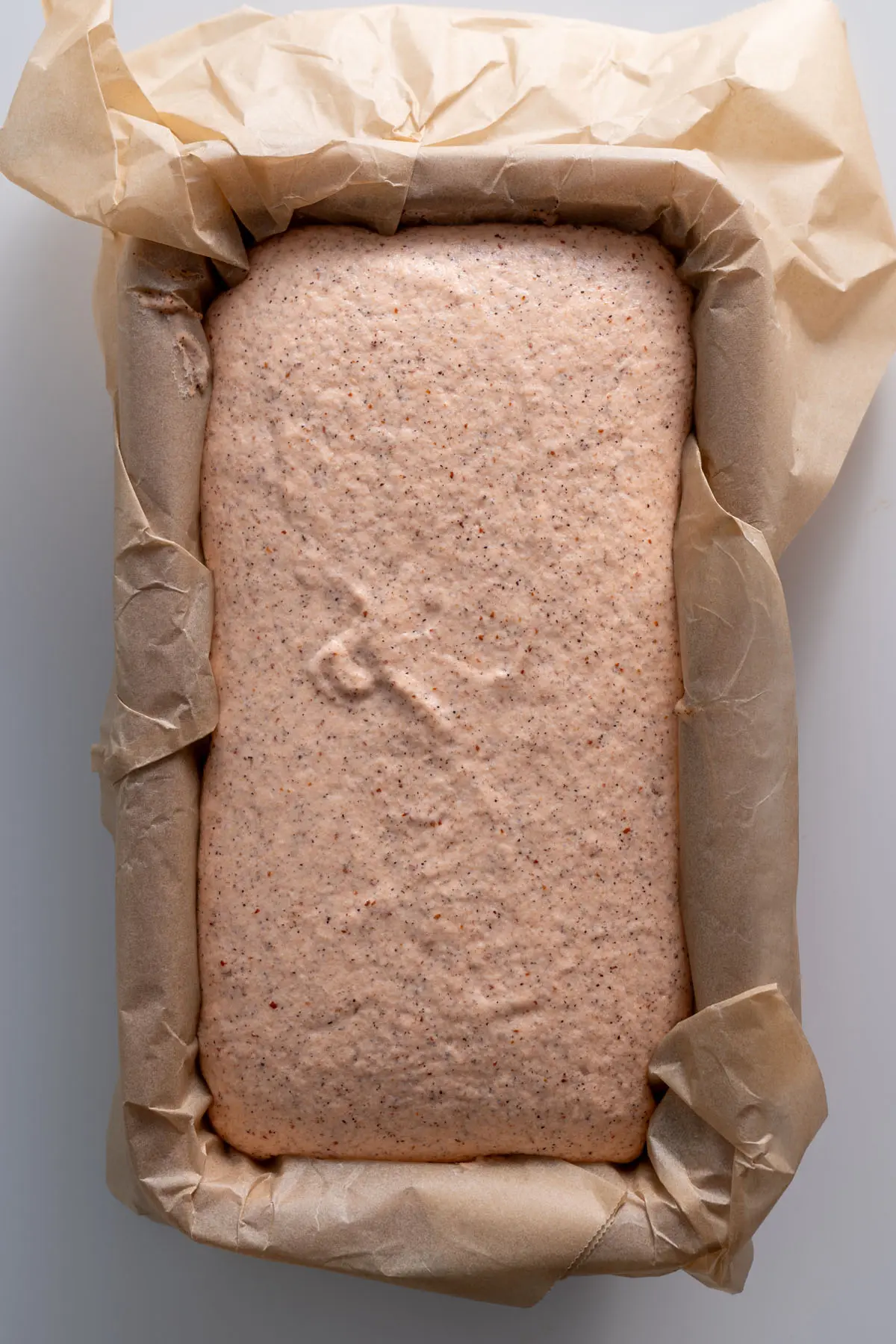
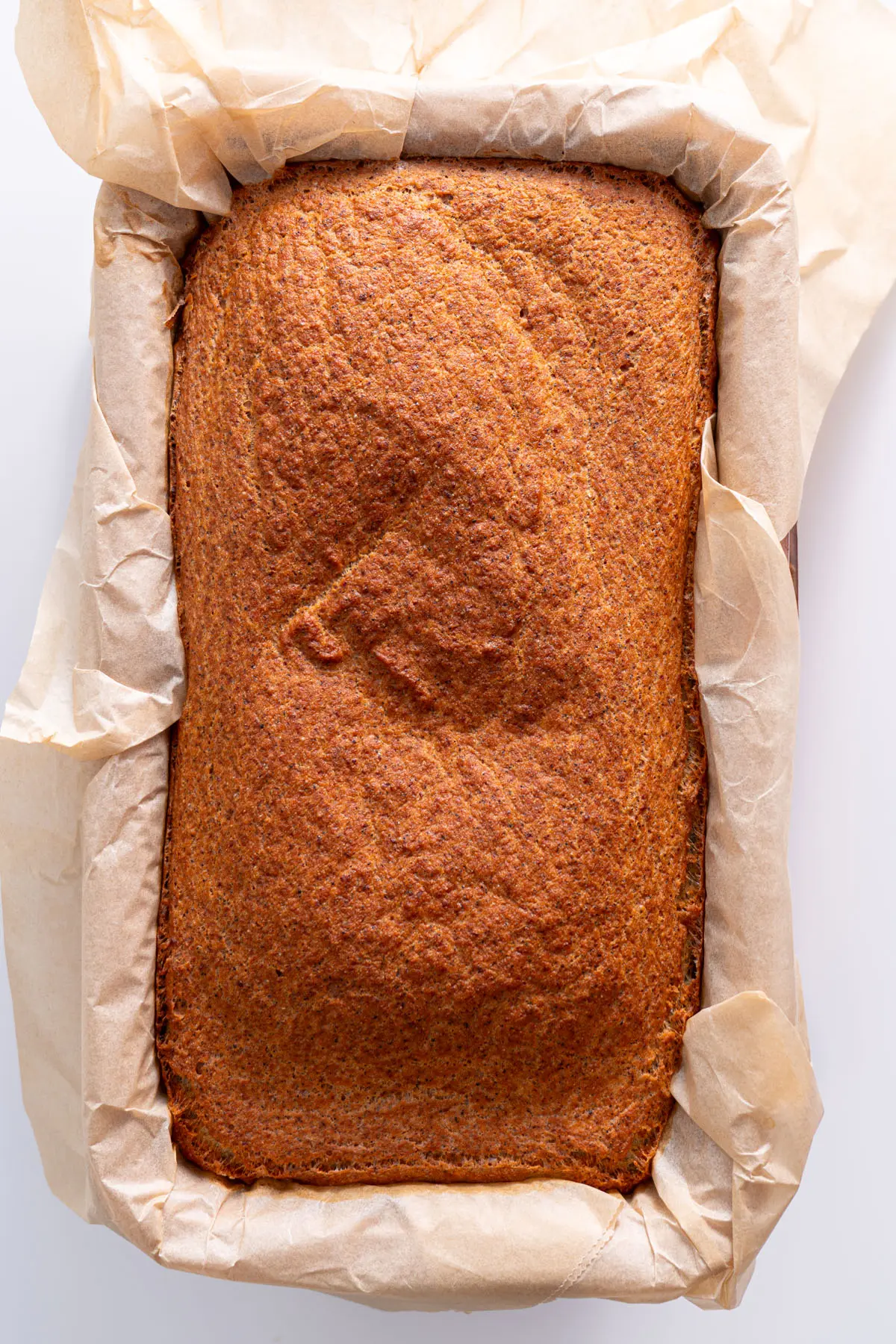
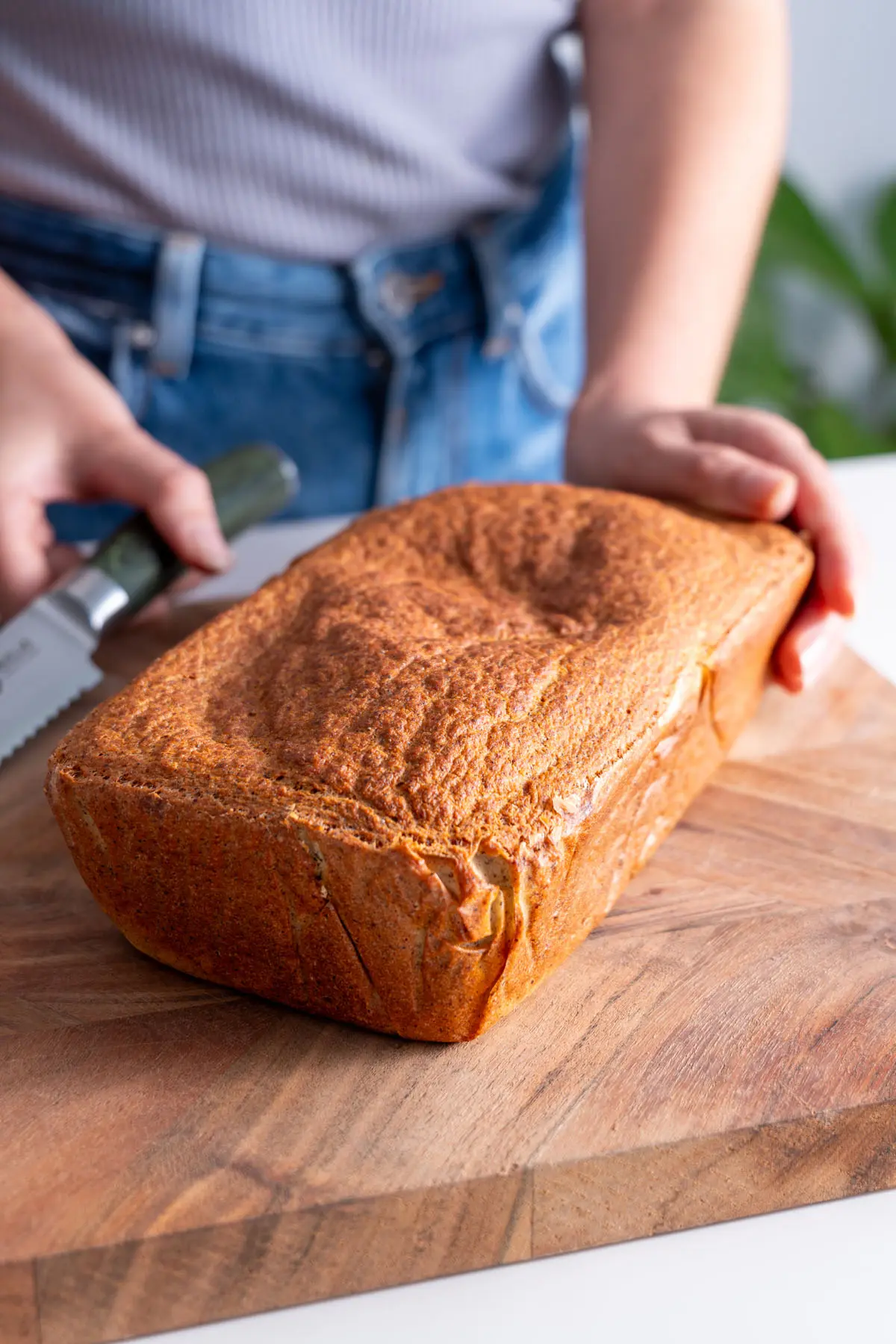
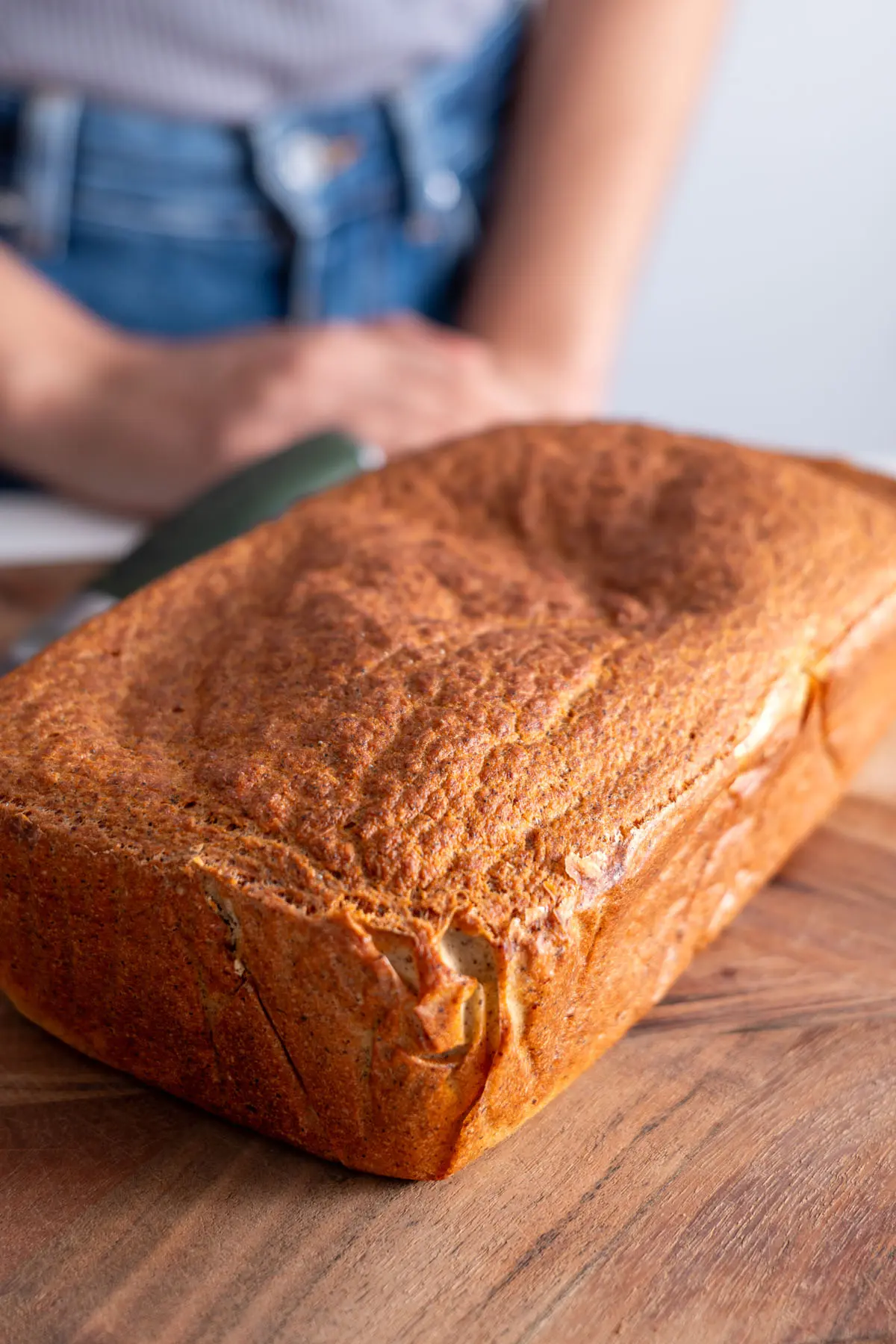
Once golden, remove from the loaf tin and let it cool completely before slicing. View recipe card below for detailed instructions.
Variations and Tips
- For a salt-free option, swap for your spices of choice. For extra flavor, add 1 teaspoon of garlic powder or herbs. Garlic helps our body absorb iron, so it makes a great pairing. Garlic bread, anyone?
- Let the bread cool completely before slicing to prevent it from crumbling.
- Meal-Prep: It’s easy to prep in advance and can be frozen. I usually keep half fresh, wrapped in a clean kitchen cloth, to consume in a couple of days and slice and freeze the rest. Toast when ready to eat, and it’s as good as fresh! This way, you can toast a piece whenever you want some delicious bread.
- Cost-effective: Good quality, nourishing, gluten-free bread can be pretty expensive where we live, often costing around $15 AUD ($9.80 USD), whereas this Red Lentil and Quinoa Breads come out at about $3.7 AUD ($2.5 USD). Of course, this can vary depending on your location.
- This bread pairs wonderfully with some avocados, or our Red Lentils Hummus, or Beet Hummus, and topped with Easy Pickled onions.
- If you like the idea of using lentils in gluten-free alternatives to baked goods, try our GF Pizza Crust or 2-Ingredient Quinoa-Red Lentils Wraps.
- For another delicious, dense bread alternative, try our viral 1-Ingredient Buckwheat Bread, or Gluten-free Seeded Bread.
Why You’ll Love This Red Lentil Quinoa Bread TLDR
- Gluten-free
- High-protein
- Oil-Free
- Simple ingredients
- Healthy and satisfying
- Vegan
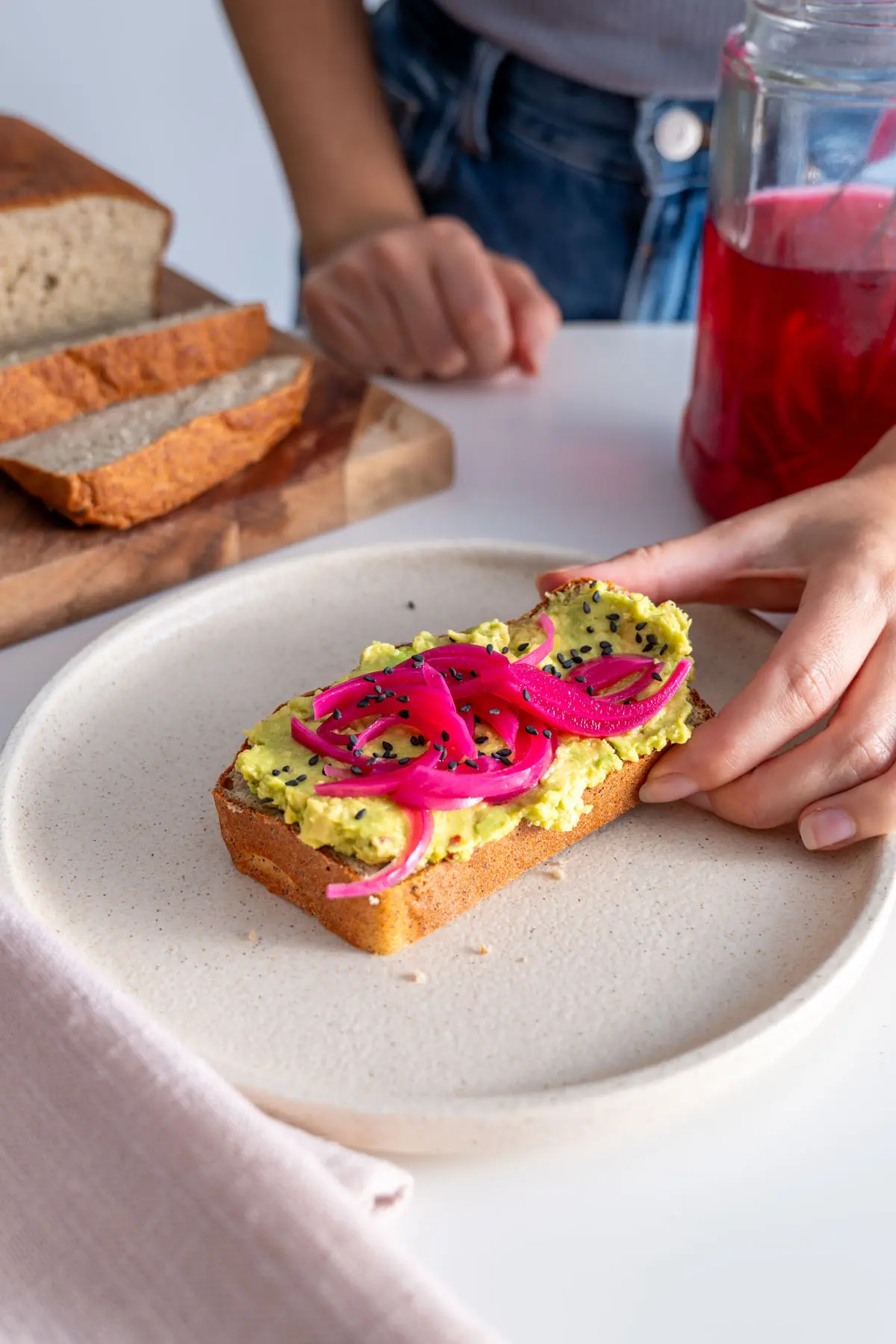

Red Lentil Quinoa Bread (Gluten-Free)
Ingredients
- 1 ½ cups (280 g) dried split red lentils
- ½ cup (85 g) dry quinoa
- 1 tbsp (7 g) instant dry yeast - see notes
- 3 tbsp (45 g) dairy-free yogurt - or sub 2 tbsp olive oil
- 2 tbsp (10 g) whole psyllium husk
- 1 tsp (6 g) sea salt flakes
- 1 ¼ cups (295 ml) water
Instructions
- Thoroughly rinse the lentils and quinoa. Transfer to a large bowl and cover with cold water. Soak for 6-12 hours in the fridge. Drain the lentils and quinoa thoroughly. They can hold a lot of extra water, which will keep the bread from cooking properly, I recommend letting them sit in a sieve for 10 minutes to remove the excess water
- In a high-speed blender, add the lentils, quinoa, yeast, yogurt, psyllium husk, salt, and 1.25 cups of water. Blend until smooth.
- Line a 9.5x5x2.5in loaf pan with baking paper and transfer the mixture to the pan. Let it rest uncovered for 30 minutes.
- Preheat the oven to 350°F (180°C) fan forced, with a metal tray on the bottom rack.
- Place the loaf pan on the metal tray and bake for 50 minutes. Do not open the oven door while the bread is cooking. Remove from the pan and baking paper, as soon as you take it out of the oven, and place on a baking cooling rack. Allow it to cool completely before slicing. Once cooled, keep in an airtight container for 3 to 4 days.
Notes
Video
Per Serving/Portion
FAQ
Is this bread gluten-free?
Can I freeze this bread?
Can I use another type of lentil?
What should I serve with this bread?
Is this recipe WFPB?
Why do you need to soak the red lentils and quinoa?
Can I use regular dairy yogurt instead of dairy-free?
Can I skip the yeast or use baking powder?
What can I use instead of psyllium husk?
Whole psyllium husk or psyllium husk powder?
You might also like


Straight from your kitchens.
Snap a photo in the comments on any recipe. We love to see it! Here’s what the community has been cooking recently.


Just leave a comment on any recipe and attach a photo


I want to love this bread, but my result is always dry and crumbly so I can never use it for sandwiches. Any tips?
Hi Jo, I’m very surprised to hear that, as the texture is very soft, almost bread-like, I would recommend double-checking all the ingredients are fresh before giving it another go 🙏
Bonjour, est-ce que les cosses de psyllium sont la même chose que le psyllium en poudre qu’on peut trouver dans les magasins bio? Car par chez moi je n’en trouve pas… 🙁 Merci d’avance
Pas exactement, la poudre absorbe beaucoup plus d’eau et épaissit rapidement les préparations. Les cosses entières sont plus légères et offrent une texture un peu plus aérée. En général la recommandation c’est de n’utiliser qu’un tiers si vous utilisez de la poudre, mais je n’ai pas testé avec le pain 🙏
This was very good. I made it with 3/4 cup water but it still sank in the middle. No biggie though. I had it with some vegan cream cheese and pepitos. Delicious!
Hi Gene, I’m so glad you liked it 💚 Thank you for sharing 🙂
Can I substitute sourdough starter for the yeast please? What sort of quantity? Thank you ☺️
I have not tried, but let us know if you experiment with the recipe 💚
Can I use baking powder or soda instead of yeast
Hi Judy, I have not personally tried, but if you scroll the blog comments, some people mention giving it a go 🙂
Nagyon finom lett, most már csak ezt a kenyeret sütöm, egy picit a bélzete sűrű nemtudom mi az oka, az íze az isteni. Köszönöm a receptet ❤️
This is an awesome recipe. If your bread keeps sinking in the middle, use less water. Try between 1/2 cup (120ml) – 3/4 cup (180 ml). I’ve found this helps and doesn’t impact the texture.
That’s a great tip! Thank you for sharing Roxanne 💕
Did anyone have trouble with the loaf sticking to the parchment paper?
Can I use regular yoghurt instead ?
I think any neutral tasting yogurt would work, but I have only tested it with soy 🙂 let us know how you go 🙂
Can I use regular red lentils or does it have to be split?
It has to be split red lentil 🙂 Hope you love it!
How many carbohydrates does the bread have?
Click “nutritional information” under the recipe instruction to unveil, we keep them hidden as numbers do not serve everyone 🙂
I wonder if I can make this recipe in my bread machine!
I’ve never used a bread machine so I am not quite sure, but please let us know if you try it 💚
Hi Sarah!
I make your buckwheat bread all the time and it is a game changer! I love lentil and quinoa recipe however I can’t eat yeast. Any thoughts? Thanks! Andrea
Hi Andrea, so happy you’re loving the buckwheat bread! Can you do baking powder? I haven’t tested it myself, so I don’t have exact measurements to share, but a few people in the comments have mentioned adapting it successfully with baking powder.
Alternatively, I have a new bread recipe that uses baking powder and baking soda—you might like to try that one instead if you’re not in the mood to experiment! Let me know how you go 💚
https://plantbaes.com/gluten-free-seeded-bread/
Hi Sarah
You were kind enough to answer my question about yeast several days ago, thank you! I decided to make the recipe with the yeast using coconut yogurt without any changes to your ingredients. It is delicious! Can you tell me why after about halfway through baking the center fell to the bottom? After baking and cooling the consistency was more like cake and less like bread. It did rise and bubble before I baked it? Many thanks for a great recipe! Andrea
Hi Andrea, thank you so much for the lovely message, I’m really glad you enjoyed the flavor, and I’m happy the coconut yogurt worked well!
As for the sinking, someone in the comments mentioned that reducing the water by about half a cup helped prevent the bread from collapsing in the middle, so that might be worth trying next time. Sometimes we see small differences depending on how much water the lentils absorb when soaking or blending, which can affect the final texture.
If you’d like, feel free to send me a photo of the bread so I can take a closer look at the consistency 💚
I don’t have a fan forced oven, how would you suggest I modify?
Thanks!
A conventional (non-fan) oven just uses natural heat circulation, so it can take a little longer or bake less evenly than a fan oven. Most recipes can be adapted by raising the temperature slightly (about 20 °C or 35 °F) or baking a bit longer. We haven’t tested this recipe in a non-fan oven, but a good guide could be to set it closer to 200 °C (390 °F) instead of 180 °C. Rotating the pan once during baking may also help it cook more evenly. Let us know how you go 💚
Good day. Could I customize the recipe by adding other ingredients e.g. cheese, jalapeños, chive etc.
I have not tried, I’m sure it would work in small amounts, let is know if you give it a go 🙂