


Featured comment

“Made it for the first time, following directions exactly, proofed in the oven with the light on overnight. It took 11 hours to ferment. The smell tip is handy. Baked for 90 minutes then cooled completely and had it with avocado…didn’t even wait to toast it! Delicious gluten free alternative! Next time I may try adding curry powder and sun-dried tomatoes to the mix before baking”
This 1-Ingredient Gluten-Free Buckwheat Bread recipe is an absolute game-changer! I’ve been making it every single week since early 2022, and it never disappoints! It’s incredibly easy, delicious, and super nourishing. I highly recommend throwing a couple of slices in the toaster/oven to create the ultimate avocado toast or as a side dish for dipping into soup. It even makes amazing croutons in a salad!
Since sharing this recipe with our community on social media, it’s become one of our most popular recipes to date. Hundreds of our community members have shared their versions with us on Instagram. Check out our Buckwheat Bread Instagram Highlights to see just a sample of the ones we’ve received, and please make sure to share your own!
If this bread is your thing, try our Easiest Red Lentil Bread Recipe for a quick gluten-free option (no fermentation needed) or our 2-Ingredient Buckwheat Spinach Wraps using the same hulled buckwheat groats. For more gluten-free bread variety, browse our Red Lentil Quinoa Bread, Gluten-Free Seeded Bread, and Dosa Red Lentil Wraps.

Ingredient Notes

- Raw Hulled Buckwheat: Buckwheat groats (or kernels) are the hulled seeds of the buckwheat plant. For this recipe, we can only use raw hulled buckwheat (also known as green buckwheat). Any other kind won’t work here. Despite its name containing the word “wheat,” buckwheat is actually gluten-free and makes for a fantastic bread ingredient. These groats are a staple in many Eastern European and Asian cuisines, known for their nutty flavor and versatile use.
- Water: Tap water is fine to use depending on your location, if the water is heavily chlorinated in your area, you should choose filtered water, as chlorine can impact the fermentation.
- Salt: Either sea salt flakes or table salt works fine. The salt enhances the natural flavor of the buckwheat. Add only a little bit for best fermentation
- Optional Seeds: Adds a delightful crunch and visual appeal to the bread. They are optional but highly recommended for an extra touch of flavor and texture. You can top it with any seeds you like. My current favorite combination is pumpkin seeds and sesame seeds. Poppy seeds are also lovely here. Just avoid chia seeds.
IMPORTANT: Use ONLY raw hulled, non-roasted buckwheat for this recipe (the green kind). Buckwheat flour, unhulled buckwheat, activated buckwheat, kasha, toasted or roasted buckwheat will not work in this recipe.
Why You’ll Love This 1-Ingredient Buckwheat Bread Recipe
- Delicious and Dense: It’s absolutely delicious, with a dense, satisfying texture, and gets even better when toasted! Fermentation not only enhances the flavor, but it can improve the bioavailability of certain nutrients in foods. Specifically, the fermentation process can reduce levels of phytic acid, which is known to bind some minerals and reduce their absorption. By breaking down phytic acid, fermentation can make minerals like iron, zinc, and magnesium more available for absorption by the body.
- So Easy: Although the fermentation process takes a bit of time, this recipe is very hands-off and only requires about 10 minutes of actual work. If you use the right kind of buckwheat, a high-speed blender, and follow the instructions, this simple, yeast-free bread recipe is practically foolproof.
- Cost-effective: Good quality, nourishing, gluten-free bread can be quite expensive where we live, often costing around $15 AUD (~ $9.80 USD), whereas this Gluten-Free Buckwheat Bread comes in at under $3.50 AUD (~ $2.30 USD), even when using organic hulled buckwheat.
- Meal-Prep: Easy to prep in advance and can be frozen. I usually keep half fresh, wrapped in a clean kitchen towel, to consume over the next few days, and slice and freeze the rest (which also adds extra health benefits by creating resistant starches, making it even better for gut health and blood sugar control). Toast when ready to eat, and I think it’s even better than fresh! This way, you can toast a piece whenever you feel like some delicious bread.
What Are the Health Benefits of Buckwheat?

- Buckwheat is highly nutritious, offering a source of fiber and essential minerals, especially magnesium. It’s also packed with antioxidants, particularly rutin, which supports blood vessels and circulation, and is great for heart health. Despite its name, buckwheat is naturally gluten-free, making it suitable for those with gluten intolerance or celiac disease.
- Buckwheat’s low to medium glycemic index makes it a good choice for those managing blood sugar levels. Plus, its high fiber content aids in digestion.
- Like amaranth or quinoa, these whole grain groats can be cooked like rice or oats, making them a fantastic ingredient for various dishes. From traditional porridge and pilafs to modern salads and even as a rice substitute, buckwheat is incredibly adaptable. It’s also used in making buckwheat flour, a popular alternative for gluten-free baking. We use buckwheat flour to make these High-Protein Buckwheat Pancakes with Blueberry Syrup, and they’re so fluffy and delicious!
Step-by-Step Instructions
Rinse the raw hulled buckwheat kernels under cold water until clear. After rinsing, soak 2⅔ cups (500g – 17.5 oz) of buckwheat in cold water in a large bowl, fully submerged, and cover with a clean cloth. Keep in the fridge for about 6 hours.


Once soaked, drain the remaining water, but do not rinse.


Transfer to a blender with ¾ cup + 2 tbsp (210 ml – 7 fl oz) of water and ¼ tsp salt. Blend at low speed, gradually increasing, until you get a very smooth texture with no pieces left. Pour the blended buckwheat mixture back into the bowl.

Cover it with a kitchen cloth and let it sit at room temperature for 12 to 24 hours to ferment. Please check the fermentation table below to confirm the time required based on your current climate.


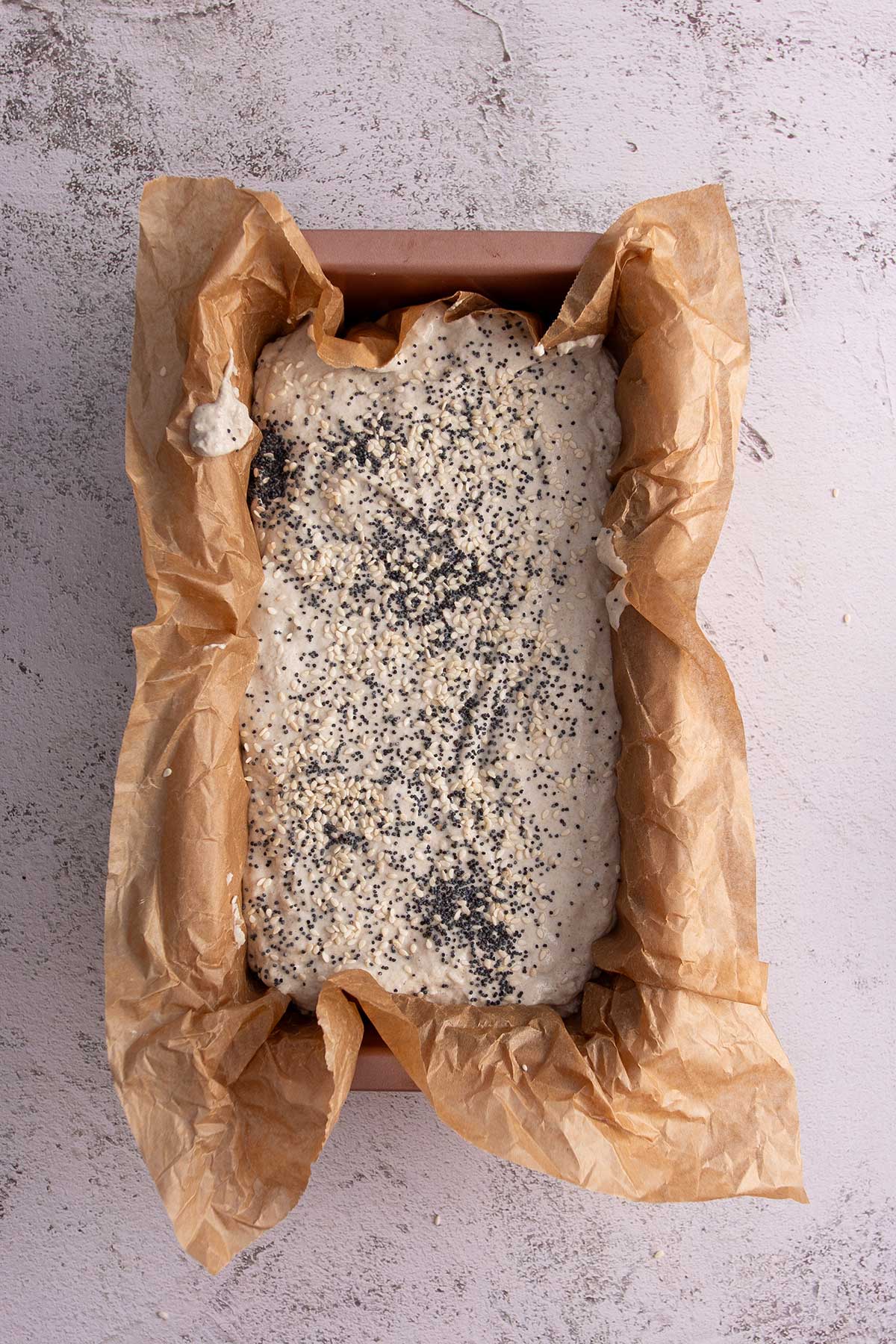
When you’re ready to bake, preheat your oven to 350°F (180C) fan on. Line a loaf pan with baking paper and pour the fermented buckwheat dough into the pan. If you’d like, sprinkle the top with seeds.

Bake the bread in the preheated oven for 90 minutes. The bread should be golden brown and firm to the touch. Remove from the loaf pan.


Allow the bread to cool down before slicing. This makes it easier to cut and improves the texture. Enjoy your homemade, nourishing, gluten-free buckwheat bread!

How Long to Ferment Your Buckwheat Bread Based on Your Current Climate
🌨️ Colder (Winter)
Soak: 6–7 hours (can be left on the counter, but fridge is recommended)
Recommended Fermentation time: 24 hours
Note: Place the bread in a warm spot or near a gentle heat source to help it ferment. An oven with the light on is a great place to keep it. Avoid drafty places.
Example: In Sydney winter, I keep mine near the stove (I cook a lot), and ferment for 24 hours.
☀️ Warm (Summer)
Soak: 6–7 hours in the fridge
Fermentation time: From 12 to 20 hours
Note: A warm environment speeds up fermentation, so check the texture for bubbles after 12 hours.
Example: In Sydney Summer, in a temperate home with AC, I ferment mine for about 20 hours.
🔥 Very Hot
Indoor temperature range: Above 85°F (30°C)
Soak: 6 hours in the fridge
Fermentation time: As little as 6 hours
Note: The hotter it is, the less time needed.
Example: People in the community in hot, steamy temperatures, such as Malaysia, have reported good results in fermenting as little as 6 hours.
Keep in mind that every home environment is a little different; temperature and humidity can affect the result. I recommend using a glass loaf pan the first time so you can monitor the texture and see the internal bubbles as it ferments. Most people get it right on the first try, but if you don’t, don’t be discouraged. There may be a slight learning curve with this one. The first time you make it, set a few timers to check on how it ferments. It’s absolutely worth it!

1-Ingredient Buckwheat Bread (Nourishing and GF)
Equipment
Ingredients
- 500 g (2⅔ cups) raw hulled buckwheat kernels - MUST be hulled, raw buckwheat groats for this recipe to work
- 210 ml (¾ cups + 2 tbsp ) water
- 1 ½ g (¼ tsp) sea salt flakes
- seeds - optional – see notes
Instructions
- Soak the buckwheat: Rinse the hulled buckwheat kernels under cold water until the water runs clear, removing any dust or impurities. Transfer the rinsed buckwheat to a large bowl and cover with plenty of cold water, ensuring the kernels are fully submerged. Cover with a clean cloth and refrigerate for 6 to 7 hours. (see notes)
- Drain: Using a fine-mesh sieve, drain the soaked buckwheat briefly. Avoid over-draining (no need to let it sit in the sink for minutes). A little residual liquid (yes, it's a little slimy) is perfectly fine and will actually help with the texture.
- Blend: Transfer to a high-speed blender with 210 ml (¾ cup + 2 tbsp) water and the salt. Blend at low speed to get the blades moving, then slowly increase speed until you reach a very smooth texture with no buckwheat bits remaining. Add up to 2 tbsp of extra water if needed.
- Ferment: Pour the blended buckwheat batter back into the bowl. Cover and let it sit at room temperature for 12 to 24 hours (timing will vary depending on your climate; refer to the timing chart and tips above to double-check). Once fermented, you will notice the mixture should be slightly bubbly inside.
- Assemble: Prepare a 24 x 13 x 7 cm (9.5 x 5 x 2.75 inch) loaf pan and line with baking paper. Pour the fermented buckwheat batter into the prepared pan. If using, sprinkle the top with seeds. If you're in a cold climate, or feel your batter could use a little more fermentation, let it sit in the loaf pan for an extra hour near a source of warmth.
- Bake: When ready to bake, preheat your oven to 350°F (180°C) (347°F (175°C), fan on). Bake on the middle to upper rack for 90 minutes.
- Cool down: Remove the bread from the loaf pan and let it cool completely before slicing. This step is important for the best texture. Enjoy your homemade buckwheat bread!
Notes
Video
Per Serving/Portion
FAQ
How long should I ferment the bread?
There is a smell to my bread. Is that normal?
However, it should NOT have a highly unpleasant fishy smell. This means the batter has over-fermented. Refer to the fermentation chart, and use timers to check on the batter the first time you make it to avoid this happening (especially in warmer climates).
Is this buckwheat bread recipe gluten-free?
Can I use a substitute for buckwheat in this buckwheat bread?
Can I use buckwheat flour?
How long does this bread last?
Can I freeze this bread?
Can I use other ingredients in this bread?
Can I skip the salt?
Does the dough rise after fermentation?
I’ve left my buckwheat to soak for more than 7 hours. What should I do?
If it was not placed in the fridge to soak, I would recommend rinsing the buckwheat and using it in another recipe, as the bread might otherwise develop a slight smell. It should still be fine to consume, just not ideal before fermenting.
Should I soak the buckwheat in the fridge or on the counter?
Do not leave it in the fridge during fermentation.
Can I slice my bread straight away when it’s out of the oven?
My bread didn’t rise – what can I do differently?
The second important factor is fermentation time. If your bread didn’t rise and you used the right kind of buckwheat, the fermentation likely didn’t take. Refer to the fermentation chart above the recipe and make sure you followed all the tips, including keeping your batter near a source of warmth, or in the oven with just the light on, if your home is particularly cold or drafty.
Next, check that you didn’t add too much salt, and that your water wasn’t high in chlorine. This is why filtered water works best for some people.
A less common cause is using an iron, aluminum, or copper bowl, all of which can hinder fermentation.
Once you’ve poured the batter into the loaf pan, if you feel it could be slightly more fermented (especially if your home is currently cold), leave it near a source of warmth for 1 hour before baking.
If none of this helped, leave a comment below with a photo of your bread, and your exact process, and we’ll figure it out together. I’ve helped thousands of people make this recipe, and I’ll make sure you get your delicious buckwheat bread too!
My blender is overheating or has a burning smell, what should I do?
Why is my bread dense, gummy, or slumped in the middle?
Can I skip the fermentation or use yeast to make it rise faster?
Can I try this with other grains like teff, quinoa, barley, or sorghum?
You might also like


Straight from your kitchens.
Snap a photo in the comments on any recipe. We love to see it! Here’s what the community has been cooking recently.


Just leave a comment on any recipe and attach a photo


Should it be covered with a towel instead of a plate / lid for the fermenting step?
A towel is great 🙂
Hello,
I tried your recipe to the letter and was delighted with the results! It was a firm, sliceable, deliciously nutty and wholesome bread. I’m wondering if I can add a spoonful of crushed honeycomb to the soaked buckwheat just before grinding it all and letting it ferment. Would fermentation still happen? Many thanks.
I’m so happy to hear that! I’ve never cooked with honeycomb, but would recommend you incorporate it the same way we do nuts, chopped, and stirred in after fermentation, just before baking 🙂 let me know how you go 💚
I tried to message you with this: (if this is a duplicate I apologize,)
LOVE this recipe. Made it twice with exceptional results. Game changer and I’ll likely never eat any other bread.
Question:
Can you add fresh fruit like apples or bananas?
Can you add honey, syrup, brown sugar?
Can you add protein powder?
Thank you
I’m so happy to hear that, thank you for the lovely feedback! I actually have not tried with any of these additions, I think fresh fruits might make it wetter, which I’m not sure would be great. Dried fruits can definitely be added after the fermentation phase, before baking. I think sweeteners would be best added at the blending phase (sugar speeds up fermentation, so you might be able to reduce your fermentation time slightly). And I’m not so sure about the protein powder, but I’m intrigued and will definitely experiment with that! Would love to hear your results if you try any of these 💚
If I don’t have access to Kernels, how can I make this recipe with flour or flakes?
Unfortunately it won’t work for this specific recipe, but I’m working on a buckwheat flour bread recipe I’m hoping to share soon 💚
I want to try this bread very much but am not sure how big a cup is? In the UK we weigh dry ingredients and measure liquids in fluid ounces or litre. If I buy a set of measuring cups are they all a universal size? I wonder Sarah if you are able to translate the cups of buckweat and the waterinto actual weight and measures?
Many thanks Sylvia
Hey lovely, you can select “metrics” just above the ingredient list to get all of our recipes in grams 🙂 in this case its 200ml water and 500g buckwheat. Hope you love the bread, let me know how you go 💚
Hi I live in the UK too. Where would you buy the hulled buckwheat from. And its winter here so would you recommend the 24hr fermentation. I do have my heating on but at night it drops down in temperature. Thank you sara
I’m not sure where you can get it in the UK (I’m in Australia) but hopefully someone else will know 🙂 Definitely the full 24 hours, and let it ferment in the loaf pan. Does it get very cold at night? If so maybe keeping the heater on a bit or waiting until it gets a little warmer will get you the best results. Hope you love the bread 💚
I know sainsburys sell it, and probably holland and barret or grapetree
I just bought some off Amazon.uK.
Organic, hulled , non-roasted.
I’ve bought some in Waitrose
Thank you. I will look
Just put mine into the oven, can’t wait to see the result. But the consistency is not as liquid as yours in the video (I had to scoop it with a spoon) though I took exactly 500g of buckwheat and 200 ml of water. Maybe my blender wasn’t strong enough?
Yes it might be due to the blending part, or it might have fermented a bit more than the one I had on the video 🙂 did you use hulled non roasted buckwheat? Let me know how yu go once it’s cooked 🙂
Yes I used hulled non-roasted buckwheat. It came out smelling deliciously with a wonderful crust. A bit more compact than on your photo. Tastes very buckwheat-y which I guess is what should be expected, tasted good with some butter and cheese!
Hi,
I tried your recipe. After soaking the buckwheat for about 7 hours, I’ve done the fermenting process for about 12 hours. I used a bowl and covered it with a plate. The dough smelled little bit foul today. I’ve baked the bread anyway. Can I eat it oder should I make another try?!
Thank you!
Fermented buckwheat has a specific smell, which will go down once cooked. Over soaking or fermenting, can make the smell stronger. However it should not be smelling foul, how did you go once cooked? Maybe next time you can try soaking it for 6 hours only in the fridge if it’s very hot where you are 🙂
Buckwheat, salt and water makes 3 ingredients. Why does it say 1 ingredient?
Hi, really want to try this recipe. Has anyone made this living in a colder climate? I live in Norway and I’m wondering how long to ferment. It would be inside in my kitchen where the temp is 19degC? Thanks 🙂
Very excited to try this! Accidentally, I left the buckwheat for 24 before I blended it!! I live in Sunny Queensland! Do you think it will still work? Should I perhaps do the second stage for less time? Thanks I’m advance,
We recommend 6 to 7 hours as it can have a bit of a strong smell if oversoaked, but if that’s not the case it’s perfectly fine to use 🙂I would try to ferment for 12 hours on this one. Let me know how you go 🙂
Hi, is it ok to let it soak for more than 7 hours (if I left it over night is that ok?). Thank you
If it’s soaked too long it might developed a smell, but overnight should be fine if it’s not too hot where you are 🙂 how did you go?
Hello, great recipe but after fermentation it smelt very strong is this normal?
Hey Amy, how long did you soak the buckwheat, ferment and what climate are you currently in?