This post is a paid partnership with Bambu Lab. They sent us a printer and we have been using it for months. Everything in here is something I actually use in my kitchen, and all opinions are my own. If you buy through the printer link in this post, we may earn a small commission.
Cam really wanted a 3D printer, and I want to be very clear that it was supposed to be his hobby. It has taken me about six weeks to fully take it over. He handles the setup and maintenance, and I get to walk past the kitchen, notice something mildly annoying, and scroll the app (Bambu Handy) to find the perfect print to fix it. It is, I think, the best possible division of labor. It’s so convenient and satisfying to fix all the little things that cause friction in the kitchen. They are the tiny upgrades that are really helping to organize my kitchen and save me a lot of time across the week.
Why it turned into a kitchen thing
I did not expect the printer to end up being a kitchen tool. I assumed we would print a phone stand, get bored, and leave it in the cupboard next to the waffle maker.
What actually happened is that a kitchen is full of problems that nobody sells a good solution for. My spice jars were the wrong height for the drawer. Container lids do not stack, they slide. There is no shelf in the world sized for exactly the things you own. Normally you live with it, or you buy a plastic organizer that is close enough and slightly wrong forever. With a printer sitting there, “close enough” stopped being the only option, and that turned out to be a genuinely different way of solving problems.
The six things I use every week
1. The spice drawer insert

This is the one people ask about most. It is an angled rack that sits inside a drawer and tips every jar toward you so you can read the labels from above instead of pulling out six jars to find the cumin. It is the single biggest time saver in here, because most of the faffing in cooking is not cooking; it is looking for things. Ours is sized for the jars we already owned, which is the part you cannot buy in a shop.
This one is not from a library. Cam measured the drawer and the jars, described both to Claude, and had it generate the model file directly. That still feels like a slightly absurd sentence to write, but it took him about ten minutes and the result fits our drawer exactly, which no product on a shelf was ever going to do. If you have an awkward space and cannot find a model for it, that is genuinely the move now.
2. The container lid organizer


If you meal prep, you own more lids than you can reasonably store, and they live in a drawer in a state of collapse. This one is a simple comb that holds them upright and separated by size, so you grab the lid you want instead of excavating for it. Genuinely, this fixed a thing that had annoyed me every single week for years.
Model: Lid holder (for food container) Kitchen Organizer by Reiba
3. The recipe stand


A little stand that props the iPad up on the bench at a readable angle while I cook. I had been leaning my tablet against the fruit bowl for approximately four years. This one is not a quick print, it took about seven and a half hours and a bit over 400 g of filament, so it is the big job on this list. Worth it though, because you want something solid enough to safely hold the Ipad. It is better than every stand I have owned, and it wipes clean, which the fruit bowl method did not.
Tablet Stand, iPad Compatible, Fun Wibble Aesthetic by Abstractia Design
4. The utensil crock

A fluted pot for the wooden spoons and spatulas next to the stove. This one is honestly just because I wanted it to look nice. It looks beautiful on the bench, and I love the color.
Model: Ribbed Kitchen Utensil Holder, Utensil Basket by Deltaprints
5. The bag clips


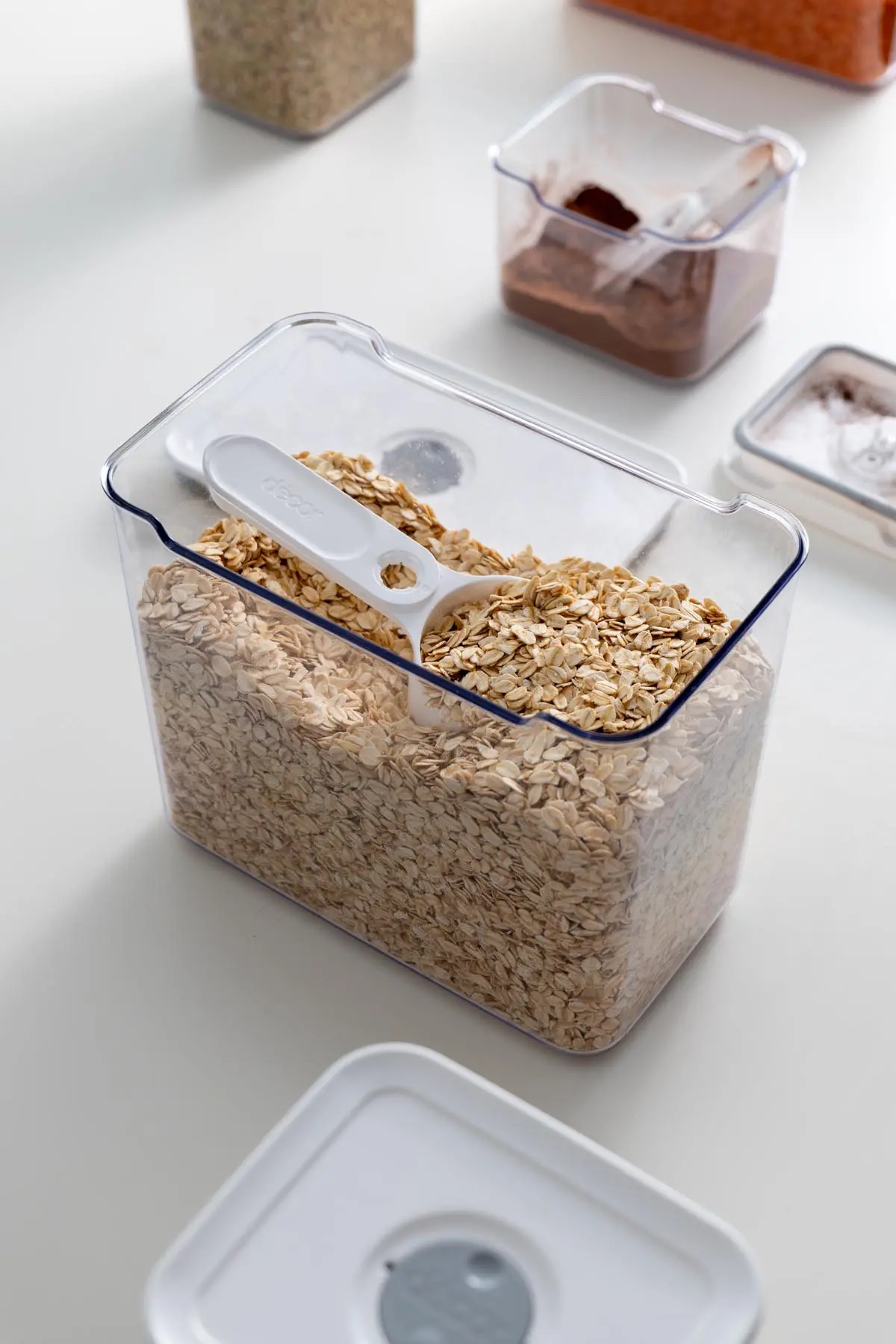
We print these in batches and they live everywhere. Frozen edamame, half a bag of oats, the rice paper sheets, the spinach that would otherwise go sad by Thursday. Sealing bags properly is one of those unglamorous habits that genuinely cuts food waste, and cleaning time. Having a bowl of clips right there is the difference between doing it and meaning to do it.
Model: Mini Bag Clip by fifindr
6. The paper towel holder


Upright, weighted, takes up a small footprint on the bench, and lets you tear one handed. Not a life-changing object. But it is a nicer one than the one we would have bought, it matches the utensil crock.
Model: Paper Towel Holder / Stand Japandi by SabreDesign
How little effort this actually takes

This is the part I did not believe until I did it. I am not designing anything. I am not learning software. I find a model I like in the Bambu Handy app on my phone, tap print, choose the color, and the printer starts. That is the whole workflow. I have sent prints from the couch. I have sent prints from the car.
The models themselves come from MakerWorld, which is a big free library of things other people have designed and shared. If you have a specific drawer or a specific jar, someone has usually already solved it and uploaded the file. I have linked the exact ones we use above, and the designers who made them deserve the click.
A quick, honest note on the material
Most of what we print is PLA. It is a plastic, but a plant-based one, made from corn and sugarcane rather than crude oil, and it is one of the few plastics that can be industrially composted at end of life. I would rather say that accurately than pretend it is not a plastic at all.
Bambu Lab also released a filament called PLA Pure this year, made from five ingredients that are each certified against the European standard for food-contact materials, and certified for indoor air quality as well. Worth knowing about. Two caveats I would want you to know before you print a bowl: the certification covers the filament, not the finished object, and 3D printed parts have fine layer lines that make them a poor choice for anything wet or anything that needs a hot wash. Nothing printed should go in the dishwasher.
None of the six things above touch food, which is why I have been relaxed about all of this. They hold jars, lids, handles, paper towel and closed bags. For anything that would actually hold food, I would use a normal container.
The recipes these actually help me make
All of this exists in service of the same goal, which is making it easier to eat well on a normal week. These three are the ones currently in rotation in our house, and they are the reason the spice drawer and the lid rack get used every Sunday.
- Spicy Peanut Noodle Salad Meal Prep, three lunches in 25 minutes with 33 g of protein a serving, and it stays crunchy for days because the vegetables go in raw.
- Carrot Cake Overnight Oats, made in jars the night before, 10 g of fiber and 16 g of protein to start the day.
- Cookie Dough Bliss Balls, the thing I make so there is something in the fridge at 3pm that is not a biscuit.
You might also like

Straight from your kitchens.
Snap a photo in the comments on any recipe. We love to see it! Here’s what the community has been cooking recently.


Just leave a comment on any recipe and attach a photo